

Choosing an ecommerce platform is no longer only about building a website.
A serious ecommerce business also needs hosting, checkout, payments, security, product management, shipping, tax workflows, SEO, analytics, customer support, and ongoing maintenance.
That is where SaaS ecommerce platforms come in.
A SaaS ecommerce platform gives you ecommerce software through the cloud. You access it through a browser, pay through a subscription or platform-based pricing model, and manage your store from a dashboard.
The biggest advantage is simple: you can focus on selling instead of building and maintaining the technical stack yourself.
In this guide, I will explain what SaaS ecommerce platforms are, how they work, their benefits and limitations, how they compare with self-hosted ecommerce, and which SaaS ecommerce platforms are worth considering in 2026.
TL;DR:
SaaS ecommerce platforms are cloud-hosted ecommerce solutions that help businesses build and manage online stores without installing software, managing servers, or maintaining the technical infrastructure themselves.
With a SaaS ecommerce platform, the provider usually manages hosting, security, platform updates, backups, and core software maintenance.
The business owner manages the storefront, products, orders, payments, shipping, tax settings, marketing, analytics, and customer experience from a browser-based dashboard.
Popular SaaS ecommerce platforms include FlyCommerce, Shopify, BigCommerce, Wix Ecommerce, Squarespace Commerce, Salesforce Commerce Cloud, Adobe Commerce Cloud, and Square Online.
SaaS ecommerce is a strong fit for founders, small businesses, DTC brands, agencies, and ecommerce teams that want faster setup, lower technical dependency, and a more manageable platform foundation.
What Is a SaaS Ecommerce Platform?
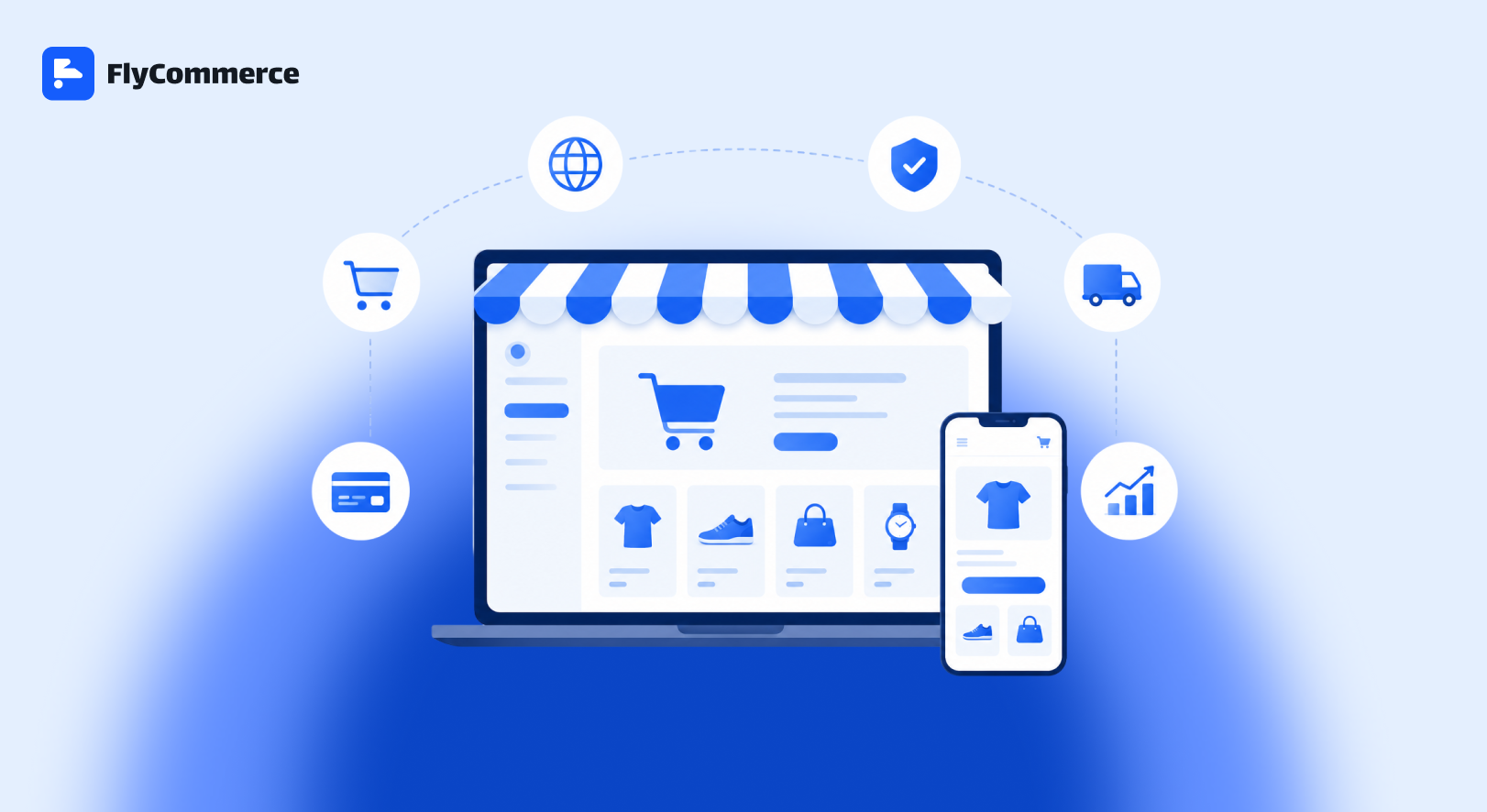
A SaaS ecommerce platform is cloud-based ecommerce software that businesses use to create, launch, and manage online stores.
SaaS stands for Software as a Service.
Instead of downloading software, setting up hosting, managing servers, or building an ecommerce system from scratch, you subscribe to the platform and use it online.
The platform provider hosts the software, maintains the infrastructure, handles updates, and gives you access to ecommerce features through a web dashboard.
In simple terms:
A SaaS ecommerce platform lets you run an ecommerce business without managing the technical backend yourself.
Most SaaS ecommerce platforms include tools for:
| Core area | What it helps you manage |
|---|---|
| Storefront | Website design, themes, pages, navigation, and brand experience |
| Products | Product listings, categories, variations, pricing, and inventory |
| Checkout | Cart, checkout flow, payment options, and order confirmation |
| Payments | Payment gateways, transaction processing, and payment settings |
| Shipping | Shipping rules, rates, delivery options, and fulfillment workflows |
| Tax | Tax settings, tax calculation, and tax-related workflows |
| Orders | Order management, status updates, refunds, and customer communication |
| Marketing | Coupons, SEO, analytics, email tools, and growth integrations |
| Security | Hosting, SSL, updates, monitoring, and platform maintenance |
The biggest difference is ownership of the technical stack.
With SaaS, the provider manages the infrastructure. You manage the business.
How Do SaaS Ecommerce Platforms Work?
SaaS ecommerce platforms work by giving you access to a hosted ecommerce system through a monthly, yearly, or usage-based pricing model.
The setup usually follows this process:
- You create an account.
- You choose a plan.
- You select a theme or storefront layout.
- You add products.
- You connect payment gateways.
- You configure shipping and tax settings.
- You launch the store.
- You manage orders, customers, marketing, and analytics from the dashboard.
You do not need to install ecommerce software on your own server.
You do not need to manually update the platform.
You do not need to maintain the hosting environment.
That is the main value of SaaS ecommerce.
The platform provider handles the technical foundation, while you focus on products, customers, orders, and growth.
For a deeper beginner guide, read: What Is Ecommerce and How Does It Work?
SaaS Ecommerce vs Self-Hosted Ecommerce
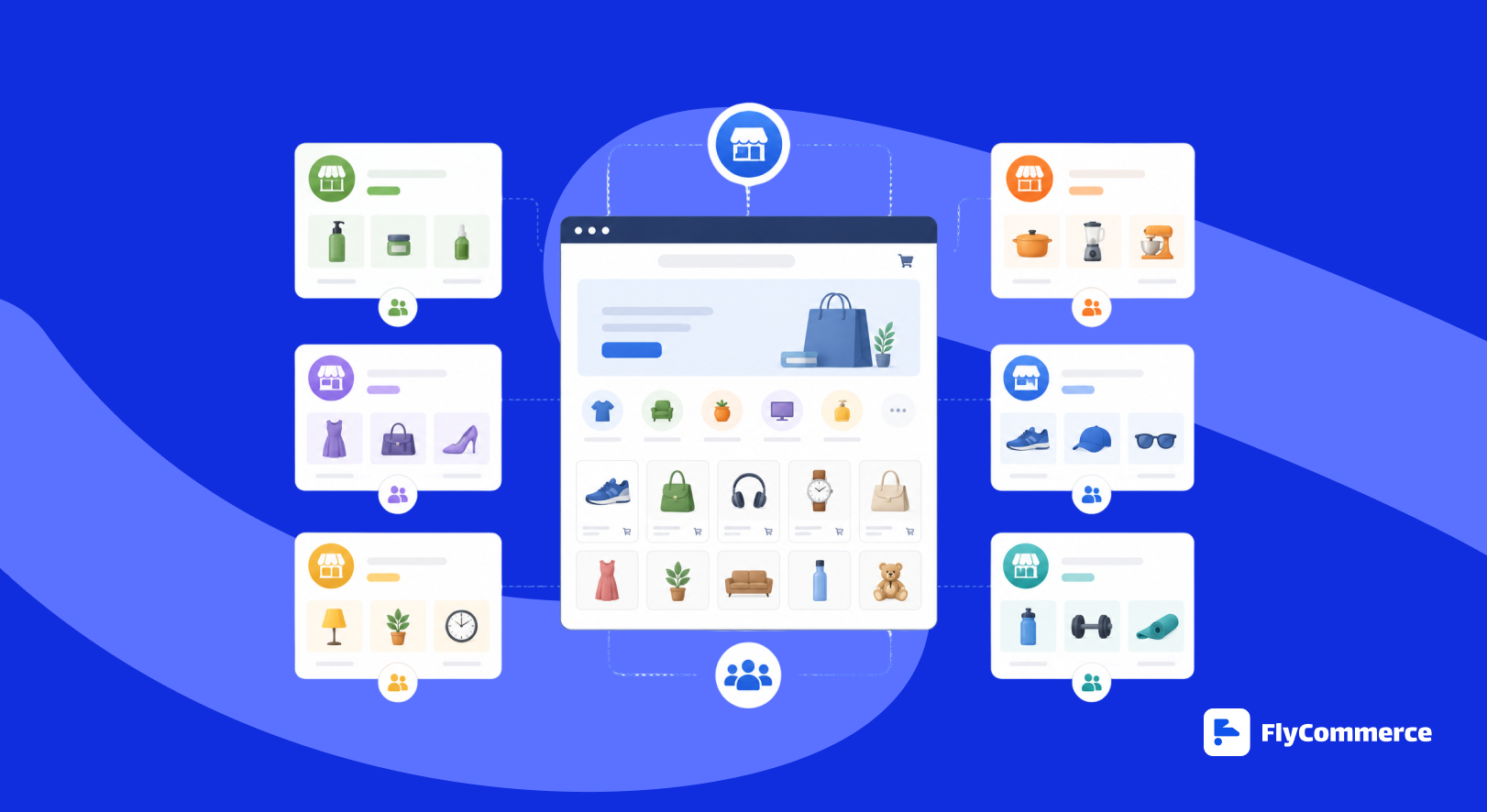
The main alternative to SaaS ecommerce is self-hosted ecommerce.
Self-hosted ecommerce means you install or build ecommerce software on your own hosting environment. This can give you more technical control, but it also adds more responsibility.
Here is the practical difference:
| Area | SaaS ecommerce | Self-hosted ecommerce |
|---|---|---|
| Hosting | Managed by the platform provider | Managed by you or your technical team |
| Software updates | Handled by the provider | Handled by you |
| Security maintenance | Mostly handled by the provider | Your responsibility |
| Setup speed | Usually faster | Usually slower |
| Technical control | More limited than self-hosted | Higher control |
| Developer dependency | Lower for most standard stores | Higher |
| Ongoing maintenance | Lower | Higher |
| Best for | Businesses that want less technical setup | Businesses that need deep custom control |
Neither model is automatically better for everyone.
A SaaS ecommerce platform is usually better if you want faster launch, lower technical overhead, managed hosting, automatic updates, and easier day-to-day operations.
A self-hosted ecommerce setup may be better if you need deep code-level control, custom infrastructure, or a highly specialized ecommerce system.
For most new stores, small businesses, DTC brands, and non-technical founders, SaaS is usually the simpler starting point.
Benefits of SaaS Ecommerce Platforms
SaaS ecommerce platforms are popular because they reduce the technical work required to launch and manage ecommerce.
Here are the main benefits.
Faster Setup
A SaaS ecommerce platform gives you a ready ecommerce foundation.
You can usually start with templates, themes, built-in checkout, product tools, and payment settings instead of building everything from zero.
This helps businesses move faster from idea to live store.
Lower Technical Dependency
With SaaS, you do not need to manage servers, install software, handle platform updates, or maintain the hosting environment.
That reduces the need for technical support during basic setup and daily store management.
Developers can still help with advanced customization, but they are not always required for the first version of the store.
Managed Hosting and Updates
SaaS platforms host the software for you.
They also handle platform updates, bug fixes, security patches, and infrastructure maintenance.
This matters because ecommerce websites need to stay reliable. A slow, outdated, or broken checkout can directly affect sales.
Predictable Platform Costs
Most SaaS ecommerce platforms use a subscription or platform-based pricing model.
That makes the platform cost easier to plan compared with custom development or self-hosted setups where hosting, security, development, and maintenance costs can change over time.
You still need to consider payment processing costs, transaction fees, apps, themes, integrations, and support needs, but the core platform cost is usually clearer.
Built-In Ecommerce Features
SaaS platforms often include the main ecommerce features businesses need to start selling.
This may include a storefront builder, product management, checkout, payments, order management, shipping rules, tax settings, coupons, SEO tools, analytics, and integrations.
That means you can start with a connected system instead of assembling every piece separately.
Easier Scaling for Growing Stores
As traffic and orders grow, the platform provider handles much of the infrastructure side.
You may still need to upgrade plans, improve operations, add integrations, and strengthen fulfillment, but you do not need to rebuild the technical foundation every time your store grows.
Access From Anywhere
Because SaaS ecommerce platforms are cloud-based, you can usually manage your store from a browser.
That helps founders, remote teams, agencies, and operators manage ecommerce activity without being tied to one device or physical office.
Limitations of SaaS Ecommerce Platforms
SaaS ecommerce is not perfect.
Before choosing a SaaS ecommerce platform, you should understand the trade-offs.
Less Code-Level Control
SaaS platforms usually give less backend control than self-hosted or custom-built systems.
That is not a problem for most stores, but it can matter if your business needs very specific infrastructure, custom workflows, or deep backend modifications.
Platform Rules Matter
With SaaS, you operate inside the platform’s rules.
That may include limits around checkout customization, payment options, app usage, data handling, or certain advanced workflows.
Before choosing a platform, check whether it supports the way your business needs to sell.
Costs Can Increase as You Grow
SaaS platforms may charge based on plans, staff seats, revenue share, transaction fees, apps, integrations, or enterprise usage.
The starting price may look simple, but the real cost depends on your order volume, payment method, app stack, support needs, and growth stage.
App Dependency Can Add Complexity
Many SaaS ecommerce platforms offer app marketplaces.
Apps are useful, but too many apps can create a messy setup.
More apps can mean more subscriptions, more settings, more support points, and more risk of conflicts.
A strong SaaS platform should reduce complexity, not force you to rebuild the business through disconnected tools.
Who Should Use a SaaS Ecommerce Platform?
A SaaS ecommerce platform is a strong fit if you want to launch and manage ecommerce without building the technical stack yourself.
It is especially useful for:
| User type | Why SaaS ecommerce fits |
|---|---|
| First-time founders | Easier setup and lower technical dependency |
| Small businesses | Less need for hosting, server, and maintenance work |
| DTC brands | Faster way to launch a branded ecommerce store |
| Local businesses | Easier path to move products online |
| Digital product sellers | Simple setup for selling downloadable or digital goods |
| Agencies | Faster way to launch ecommerce projects for clients |
| Marketplace founders | Better fit when the platform supports vendor workflows |
| Growing ecommerce teams | More predictable infrastructure and operations |
SaaS ecommerce may not be the best fit if you need full control over your own server environment, want to build every part of the system from scratch, or have highly custom enterprise requirements that cannot work within a hosted platform.
Quick Picks: Best SaaS Ecommerce Platforms in 2026
Different SaaS ecommerce platforms are built for different types of businesses.
Here is the quick version:
| Need | Best option |
|---|---|
| Online stores and multi-vendor marketplaces | FlyCommerce |
| Traditional online stores with a large app ecosystem | Shopify |
| Growing brands that need built-in ecommerce features | BigCommerce |
| Simple visual website building | Wix Ecommerce |
| Creative storefronts and lifestyle brands | Squarespace Commerce |
| Enterprise commerce teams | Salesforce Commerce Cloud |
| Larger teams that need deep customization | Adobe Commerce Cloud |
| Local businesses already using Square | Square Online |
Best SaaS Ecommerce Platforms in 2026
The best SaaS ecommerce platform depends on your business model, budget, technical needs, and growth plan.
Some platforms are built for simple stores. Others are better for growing catalogs, enterprise teams, or multi-vendor marketplaces.
Here are strong SaaS ecommerce platforms to consider.
1. FlyCommerce
FlyCommerce is a no-code, cloud-hosted SaaS ecommerce platform built for businesses that want to launch and manage ecommerce without handling the technical stack themselves.
It supports two ecommerce paths:
| FlyCommerce path | Best for | What it helps you build |
|---|---|---|
| FlyCommerce Shop | Store owners, DTC brands, SMBs, first-time sellers, and digital product sellers | A professional online store |
| FlyCommerce Marketplace | Marketplace founders, agencies, B2B teams, and marketplace operators | A multi-vendor marketplace |
FlyCommerce is a strong option if you want a hosted ecommerce platform that can support both online stores and multi-vendor marketplace workflows from one place.
It includes no-code storefront building, product management, payments, shipping, tax workflows, SEO, analytics, reporting, marketplace operations, and AI-powered product content assistance.
The strongest advantage is that FlyCommerce is not only a store builder. It also includes marketplace workflows such as vendor onboarding, seller dashboards, commission rules, vendor plans, payout workflows, and marketplace reporting.
That makes FlyCommerce a strong SaaS ecommerce platform for businesses that want to launch, sell, and grow from one managed platform instead of building the ecommerce stack piece by piece.
Key strengths:
- No-code, cloud-hosted ecommerce setup
- Online store and marketplace support
- Drag-and-drop storefront building
- Built-in product, order, payment, shipping, tax, SEO, and analytics workflows
- Vendor onboarding, commissions, vendor plans, payouts, and seller dashboards for marketplaces
- AI Writing Assistant for product content support
- Built by weDevs, the team behind Dokan
Limitations:
- Newer SaaS brand compared with Shopify and BigCommerce
- Best fit should be checked against your target payment gateway, region, and marketplace requirements
- Advanced custom requirements may need product team verification
Choose FlyCommerce if:
You want a cloud-hosted ecommerce platform that can support both an online store and a multi-vendor marketplace without hosting setup, plugin maintenance, or building marketplace infrastructure from scratch.
To understand the product better, read: What Is FlyCommerce and How Does It Work?
2. Shopify
Shopify is one of the most widely known SaaS ecommerce platforms.
It is a strong choice for many online stores because it offers hosted ecommerce, themes, checkout, payments, sales channels, analytics, and a large app ecosystem.
Shopify works especially well for businesses that want a mature platform for selling their own products online.
Key strengths:
- Mature ecommerce platform
- Large app marketplace
- Strong theme ecosystem
- Multi-channel selling support
- Built-in checkout and payment options
- Good fit for many traditional online stores
Limitations:
- Marketplace workflows usually require third-party apps or custom work
- App dependency can increase complexity over time
- Third-party payment rules and platform fees should be reviewed carefully
- Not primarily built as a native multi-vendor marketplace platform
Choose Shopify if:
You want a widely adopted SaaS ecommerce platform for a traditional online store and are comfortable extending functionality with apps as your business grows.
3. BigCommerce
BigCommerce is a SaaS ecommerce platform often used by growing businesses and mid-market brands.
It is known for built-in ecommerce features, scalability, multi-channel selling, and flexibility for more complex store requirements.
BigCommerce can be a good fit for brands that want strong ecommerce functionality without depending too heavily on custom development.
Key strengths:
- Strong built-in ecommerce features
- Good fit for growing catalogs
- Multi-channel selling support
- Flexible APIs and integrations
- Useful for mid-market and larger ecommerce teams
Limitations:
- May feel more complex for beginners
- Some advanced setups may still need technical support
- Marketplace-specific workflows may require integrations or additional setup
Choose BigCommerce if:
You want a SaaS ecommerce platform with strong out-of-the-box features and room to support a growing online store.
4. Wix Ecommerce
Wix is known as a drag-and-drop website builder with ecommerce functionality.
It can be useful for small businesses, creators, local sellers, and simple ecommerce websites that need a quick, visual setup.
Key strengths:
- Easy visual website builder
- Good templates for small websites
- Simple ecommerce tools
- Beginner-friendly editing experience
- Useful for service businesses and smaller catalogs
Limitations:
- May not be ideal for complex ecommerce operations
- Advanced inventory, marketplace, or B2B workflows may be limited
- Scaling larger ecommerce operations may require a stronger commerce-first platform
Choose Wix Ecommerce if:
You need a simple ecommerce website and value visual design flexibility more than advanced ecommerce operations.
5. Squarespace Commerce
Squarespace Commerce is a good fit for creators, portfolio-led brands, lifestyle businesses, and small stores that care about design and visual presentation.
It works well when the storefront experience is simple and the product catalog is not too complex.
Key strengths:
- Clean design templates
- Simple storefront management
- Good fit for visual brands
- Useful for creators and lifestyle businesses
- Easy website editing experience
Limitations:
- Less suitable for complex ecommerce operations
- Limited marketplace functionality
- May not be the best choice for large catalogs or advanced backend workflows
Choose Squarespace Commerce if:
You want a clean, visual ecommerce site for a small product line, creative brand, or lifestyle business.
6. Salesforce Commerce Cloud
Salesforce Commerce Cloud is built for larger businesses with more complex commerce needs.
It can support enterprise ecommerce, personalization, B2B and B2C commerce, customer data, and broader Salesforce ecosystem integrations.
Key strengths:
- Enterprise-level commerce capabilities
- Strong CRM ecosystem
- B2B and B2C commerce support
- Personalization and advanced customer data workflows
- Good fit for large teams already using Salesforce
Limitations:
- Usually more complex and expensive than SMB-focused platforms
- Requires implementation planning
- Not the simplest option for beginners or small businesses
Choose Salesforce Commerce Cloud if:
You are an enterprise team that needs advanced commerce capabilities and already operates inside the Salesforce ecosystem.
7. Adobe Commerce Cloud
Adobe Commerce Cloud is connected to the Magento ecosystem and is often used by larger businesses with technical teams.
It can support complex catalogs, B2B workflows, custom frontend experiences, and advanced commerce requirements.
Key strengths:
- Deep customization potential
- Strong for complex catalogs
- B2B commerce support
- Good fit for technical teams
- Enterprise-level flexibility
Limitations:
- More technical than many SaaS ecommerce platforms
- Higher setup complexity
- Not ideal for beginners or teams without technical resources
Choose Adobe Commerce Cloud if:
You need enterprise-level customization and have the technical resources to manage a more complex ecommerce setup.
8. Square Online
Square Online is a practical option for small businesses that already use Square for in-person payments.
It can help local businesses add online ordering, pickup, delivery, and basic ecommerce functionality.
Key strengths:
- Works well with Square POS
- Useful for local businesses
- Simple online ordering setup
- Good for pickup and delivery workflows
- Easy entry point for offline businesses moving online
Limitations:
- Less suitable for advanced ecommerce operations
- Not ideal for complex marketplace models
- May be limited for brands that need deep customization or large-scale ecommerce workflows
Choose Square Online if:
You already use Square and want a simple way to add online selling to your business.
Best SaaS Platforms for eCommerce Businesses
| Platform | Best for | Key strength | Main limitation |
|---|---|---|---|
| FlyCommerce | Online stores and multi-vendor marketplaces | Store and marketplace workflows in one hosted platform | Newer SaaS brand, so region-specific payment and advanced custom needs should be verified |
| Shopify | Traditional online stores | Large app ecosystem and mature commerce tools | Marketplace workflows usually need apps or custom work |
| BigCommerce | Growing and mid-market stores | Strong built-in ecommerce features | May feel complex for beginners |
| Wix Ecommerce | Simple stores and visual website building | Easy drag-and-drop editor | Limited for complex operations |
| Squarespace Commerce | Creative and lifestyle brands | Clean design templates | Less suitable for advanced ecommerce workflows |
| Salesforce Commerce Cloud | Enterprise teams | Enterprise commerce and CRM ecosystem | Complex and costly for smaller teams |
| Adobe Commerce Cloud | Larger technical teams | Deep customization potential | Requires more technical resources |
| Square Online | Local businesses using Square | POS and online selling connection | Limited for complex ecommerce models |
How to Choose the Right SaaS Ecommerce Platform
The best SaaS ecommerce platform is not always the most famous one.
It is the one that fits your business model, team, budget, and growth plan.
Use these questions before choosing.
What are you trying to build?
Are you building a simple online store, a DTC brand, a B2B store, a digital product business, or a multi-vendor marketplace?
This matters because each model needs different workflows.
A store needs product pages, checkout, payments, shipping, tax, orders, SEO, and analytics.
A marketplace also needs vendor onboarding, seller dashboards, commission rules, vendor plans, payouts, and marketplace reporting.
For more context on ecommerce models, read: Types of Ecommerce Business Models Explained
How much technical work do you want to manage?
Some platforms are easier to launch but less customizable.
Some platforms are more flexible but require more technical setup.
Choose a SaaS platform if you want the provider to handle hosting, updates, and infrastructure.
Choose a more technical platform only if your business really needs deep control.
What features are built in?
Do not only check the starting price.
Check what is included.
Look for:
- Storefront builder
- Product management
- Payment gateways
- Shipping setup
- Tax workflows
- SEO tools
- Analytics and reporting
- Coupons and promotions
- Customer support options
- Marketplace features if needed
- AI tools if content and catalog speed matter
- Integrations for your existing tools
A cheaper platform can become expensive if you need too many paid apps to make it work.
What payment options do your customers need?
Payment methods vary by region.
A US-based store may need cards, PayPal, Apple Pay, or buy now, pay later options.
A Bangladesh-based store may need bKash or SSLCOMMERZ.
An India-based store may need Razorpay.
An Africa-focused store may need Paystack.
Before choosing a platform, check whether it supports the payment gateways your customers actually use.
What will the platform cost after you grow?
Look beyond the first-month or first-year cost.
Review:
- Monthly subscription
- Annual pricing
- Transaction fees
- Revenue share
- Payment processing fees
- App costs
- Theme costs
- Developer costs
- Support costs
- Enterprise upgrade costs
The right platform should make the total cost easier to understand, not harder.
For a detailed cost breakdown, read: How Much Does an Ecommerce Website Cost?
Will the platform support your next stage?
A platform may work for your first 20 products but fail when you need 2,000 products, multiple staff users, B2B workflows, multi-currency support, tax automation, or vendor operations.
Choose based on the business you are building, not only the store you need this week. Explore this in depth guide on how to choose the right ecommerce platform based on your use case, business model, features, budget, technical needs, scalability, and long-term growth plan.
Why FlyCommerce Is a Strong SaaS Ecommerce Platform
FlyCommerce is a strong SaaS ecommerce platform because it is built around a clear business problem:
Most sellers do not want to spend their early stage managing hosting, servers, plugins, setup, security, and custom ecommerce infrastructure.
They want to launch, sell, and grow.
FlyCommerce supports that with a no-code, cloud-hosted ecommerce platform where the core selling workflows are already part of the system.
For store owners, FlyCommerce Shop helps build and manage a professional online store.
For marketplace founders, FlyCommerce Marketplace helps build a platform where multiple vendors can sell under one marketplace.
That makes FlyCommerce different from many SaaS ecommerce platforms that mainly focus on traditional online stores.
FlyCommerce is especially useful if you want:
- A no-code storefront builder
- Cloud-hosted ecommerce setup
- No hosting or plugin maintenance
- Online store and marketplace support
- Built-in payments, shipping, tax, SEO, analytics, and reporting workflows
- Vendor onboarding, dashboards, commissions, vendor plans, and payouts
- AI support for product content workflows
- A managed platform for launching and operating ecommerce from one place
In simple terms, FlyCommerce is built for businesses that want ecommerce without building the technical stack piece by piece.
When SaaS Ecommerce Is the Right Choice
SaaS ecommerce is usually the right choice when you want to launch faster, avoid technical maintenance, and manage your ecommerce business from one hosted platform.
It is a good fit if:
- You do not want to manage hosting or servers
- You want a faster setup path
- You want built-in ecommerce workflows
- You want automatic platform updates
- You do not have an in-house development team
- You want a predictable platform foundation
- You want to focus on products, customers, sales, and growth
SaaS ecommerce may not be the right choice if:
- You need full code-level control
- You want to manage your own server environment
- You have highly custom infrastructure requirements
- You prefer an open-source setup
- You have a large technical team that wants to build everything internally
The right decision depends on what you value more: control or simplicity.
Final Verdict: Which SaaS Ecommerce Platform Should You Choose?
There is no single best SaaS ecommerce platform for every business.
The best choice depends on what you are building.
Choose FlyCommerce if you want a no-code, cloud-hosted ecommerce platform that supports both online stores and multi-vendor marketplaces.
Choose Shopify if you want a mature SaaS ecommerce platform with a large app ecosystem for traditional online stores.
Choose BigCommerce if you want strong built-in ecommerce features for a growing online store.
Choose Wix Ecommerce if you want a simple drag-and-drop website builder with ecommerce tools.
Choose Squarespace Commerce if you want a clean, visual storefront for a small creative brand.
Choose Salesforce Commerce Cloud if you need enterprise commerce connected to the Salesforce ecosystem.
Choose Adobe Commerce Cloud if you need deep customization and have the technical resources to manage it.
Choose Square Online if you already use Square and want a simple online selling option.
For many founders, small businesses, DTC brands, and marketplace operators, the main question is simple:
Do you want to build and maintain the ecommerce stack yourself, or do you want a hosted platform that helps you launch, sell, and grow from one place?
If you want the second path, a SaaS ecommerce platform is the right place to start.
To move from research to setup, read: How to Start an Online Store from Scratch
FAQs About SaaS Ecommerce Platforms
What is a SaaS ecommerce platform?
A SaaS ecommerce platform is a cloud-based ecommerce solution that lets businesses build and manage online stores through a subscription or platform-based pricing model. The provider usually handles hosting, software updates, security, and infrastructure, while the business manages products, orders, payments, customers, and growth.
What are the best SaaS ecommerce platforms?
Some of the best SaaS ecommerce platforms in 2026 include FlyCommerce, Shopify, BigCommerce, Wix Ecommerce, Squarespace Commerce, Salesforce Commerce Cloud, Adobe Commerce Cloud, and Square Online. The best choice depends on your business model, budget, technical needs, and growth plan.
Is Shopify a SaaS ecommerce platform?
Yes. Shopify is a SaaS ecommerce platform. It is cloud-hosted, subscription-based, and lets businesses build and manage online stores without hosting the software themselves.
What is the difference between SaaS and self-hosted ecommerce?
SaaS ecommerce is hosted and maintained by the platform provider. Self-hosted ecommerce means the business manages its own hosting, software, updates, security, and technical stack. SaaS is usually simpler to start, while self-hosted ecommerce gives more technical control.
Is FlyCommerce a SaaS ecommerce platform?
Yes. FlyCommerce is a no-code, cloud-hosted SaaS ecommerce platform. It helps businesses build online stores and multi-vendor marketplaces without managing hosting, servers, plugin maintenance, or ecommerce infrastructure themselves.