
What Is Ecommerce and How Does It Work? (2026)

Mamunur Rahsid
20–30 minutes
Human Written
The first secure online transaction happened on August 11, 1994. Someone bought a copy of Sting’s Ten Summoner’s Tales from a friend over the internet. The seller ran an encryption program so the credit card number couldn’t be intercepted. The buyer paid $12.48 plus shipping.
Thirty years later, global ecommerce is projected to pass $8 trillion in 2026. One in every five dollars spent on retail worldwide is spent online. In categories like fashion, electronics, and books, the share crosses 50%.
That is the market. The question most people actually have is not what ecommerce is. It is how to get into it without a developer, a hosting bill, and six months of technical setup before a single customer ever sees their store.
I have worked alongside founders at every stage of launching an online business. This guide is the one I wish existed when they were starting out: what ecommerce actually is, how it works end to end, and what it takes to launch one today.
TL;DR:
Ecommerce is the buying and selling of goods and services over the internet. The global ecommerce market is projected to pass $8 trillion in 2026, with more than one in every five retail dollars spent online. A typical ecommerce transaction moves through seven stages: a buyer finds the store, browses, adds to cart, checks out, pays, receives the order, and begins the post-purchase relationship. The main ecommerce business models are B2C, B2B, C2C, and D2C. Launching an ecommerce store no longer requires technical expertise, server management, or developer costs. A no-code, cloud-hosted platform like FlyCommerce gets a professional store live in under an hour, with Shop plans starting at $20/month plus a 1% revenue share.
What Is Ecommerce?
Ecommerce, short for electronic commerce, is the buying and selling of products or services over the internet. Any transaction where the order, payment, or delivery happens online counts as ecommerce, whether the product is a physical item shipped to your door, a digital file downloaded instantly, or a service booked and paid through a website.
The term covers more than most people initially think. Ordering a pair of shoes from a brand’s website is ecommerce. Subscribing to a software tool is ecommerce. A consultant getting paid through an online invoice is ecommerce. A musician selling a downloadable album directly to fans is ecommerce. If money changes hands and the transaction starts or ends on the internet, it qualifies.
Ecommerce is also part of a broader concept called electronic business — ebusiness — which covers all the digital processes involved in running a company. Ecommerce is the specific part that involves the transaction.
| Ecommerce example | What happens online |
|---|---|
| Buying shoes from a brand website | Product selection, checkout, and payment |
| Ordering groceries from an app | Order placement and payment |
| Buying a digital course | Payment and digital delivery |
| Subscribing to software | Signup, billing, and access |
| Booking a paid consultation | Scheduling and payment |
| Buying from a marketplace | Product discovery, checkout, and seller coordination |
Ecommerce can involve physical products, digital products, services, subscriptions, bookings, or marketplace transactions.
The simple meaning is:
Ecommerce is commerce that happens through the internet.
When Did Ecommerce Start?
The 1994 Sting CD purchase is widely cited as the first secure consumer ecommerce transaction, but the roots go deeper. Electronic data interchange between businesses existed in the 1970s. The first online shopping system appeared in 1979 in the UK, created by inventor Michael Aldrich. What changed in the 1990s was public internet access and SSL encryption, which made it safe for ordinary consumers to share payment details online.
Amazon launched in 1995. eBay launched the same year. PayPal followed in 1998. Within a decade, ecommerce moved from a curiosity to a core part of how the world buys.
How Does Ecommerce Work?
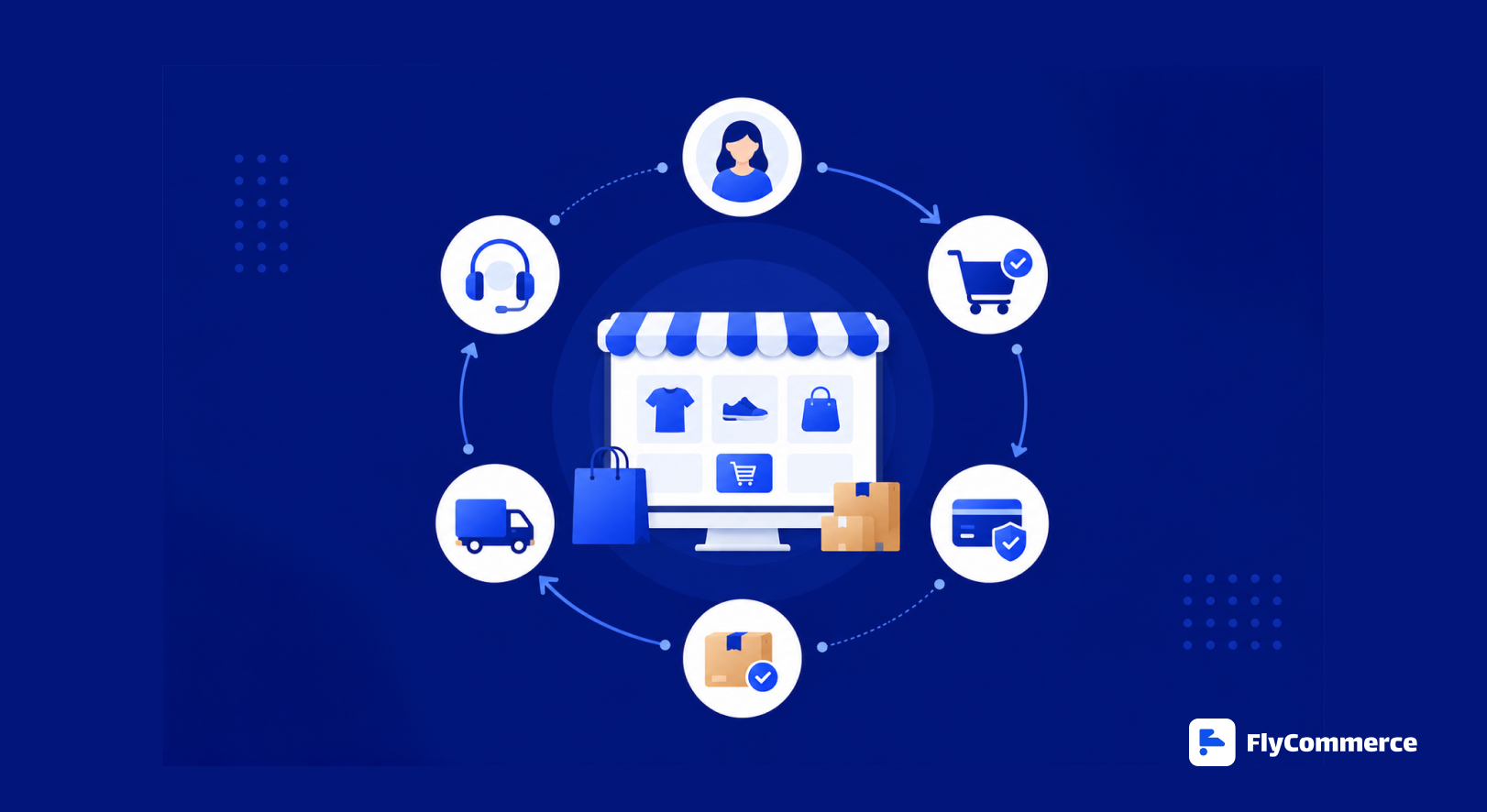
Understanding the mechanism is what separates founders who launch confidently from founders who stall. Here is the full flow – from the moment a buyer discovers a store to the moment revenue lands in the seller’s account.
How an Ecommerce Transaction Works
Step 1: A buyer finds the store A potential customer arrives at an ecommerce store through organic search, a paid ad, a social media post, a link from a friend, or by typing the URL directly. This step is where SEO, paid advertising, and social media do their work. If traffic does not arrive, nothing else in this list matters.
Step 2: They browse and compare The visitor navigates the product catalog, searches for specific items, filters by category or price, and reads product descriptions and reviews. Poor navigation and slow pages lose buyers at this step. The average ecommerce site loses 37% of visitors before they ever add anything to cart.
Step 3: They add to cart The buyer selects a product and adds it to their cart. The store saves this selection — tied to the visitor’s browser session or account — so they can continue browsing or return later.
Step 4: They check out The buyer enters their shipping address, selects a delivery method, applies any discount codes, and reviews their order. This is where hidden costs appear. Unexpected shipping fees and tax calculations added at checkout are the leading cause of cart abandonment — the global average cart abandonment rate is 70%.
Now: the part most people miss.
Step 5: They pay A payment gateway processes the transaction. The buyer’s card or digital wallet is authorized. The money moves from the buyer’s account toward the seller’s, minus payment processing fees (typically 1.5% to 3.5% depending on the gateway and card type). For the buyer, this takes seconds. Behind the scenes, it involves multiple systems: the gateway, the card network, the issuing bank, and the acquiring bank.
Step 6: You fulfill and ship Once payment is confirmed, the seller receives the order. For physical goods, this means picking, packing, and handing off to a carrier. For digital products, it means delivering a download link or account access. For services, it means scheduling and delivering the work. The buyer receives shipping confirmation and tracking information.
Step 7: The relationship continues The transaction ends at delivery. The customer relationship does not. A confirmation email, a shipping notification, a delivery confirmation, and a follow-up asking for a review are all part of the post-purchase experience. Repeat customers spend 67% more than first-time buyers. The post-purchase stage is where that lifetime value is built or lost.
Where Does Ecommerce Happen?
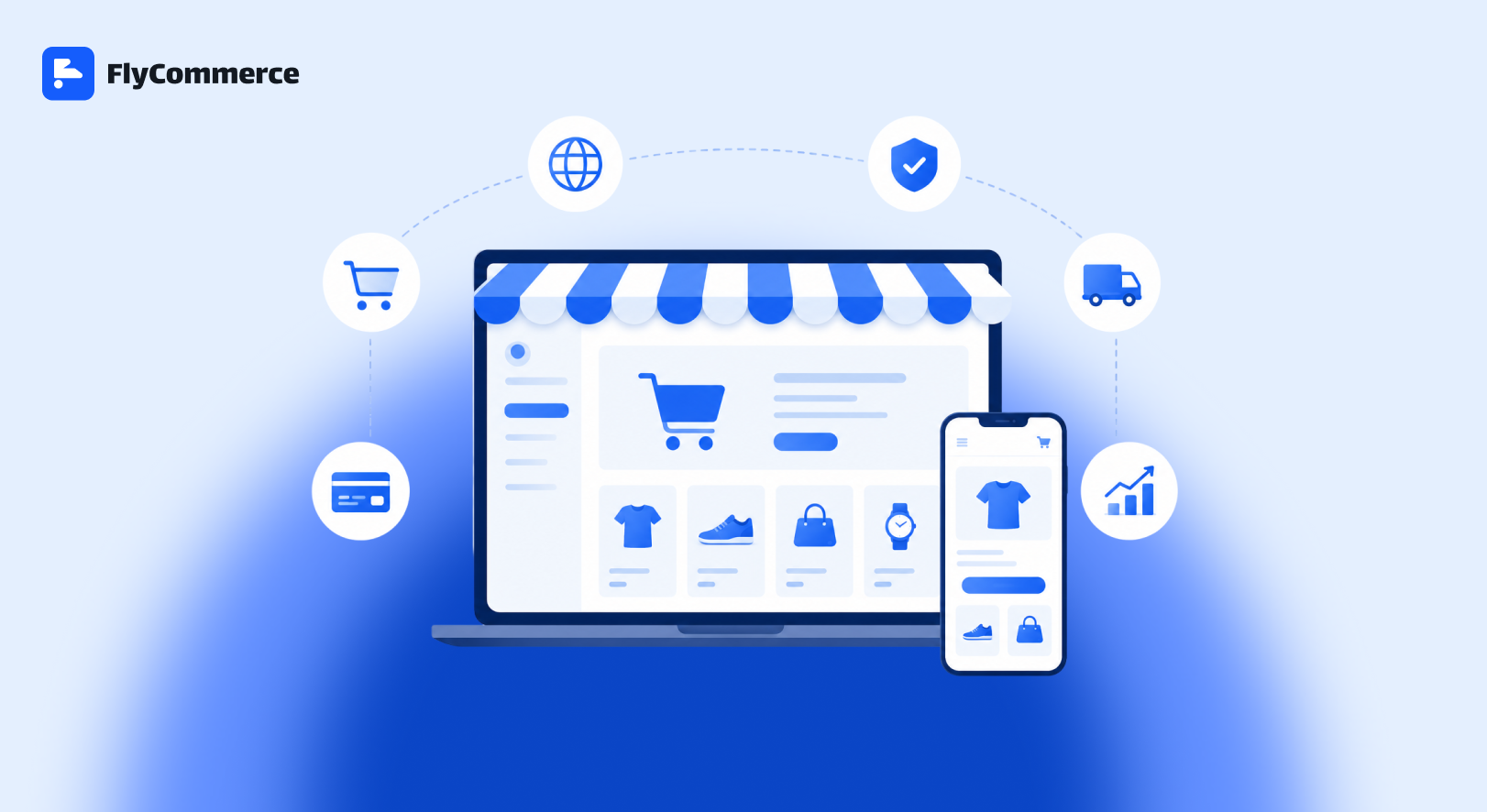
Ecommerce does not only happen on websites. Buyers purchase through multiple channels, and most successful sellers use more than one.
Ecommerce Websites
An ecommerce website is a branded online store owned and operated by one seller. The seller controls the design, the customer experience, the pricing, and the data. Buyers come through search, ads, and direct traffic. There is no built-in audience — the seller drives traffic themselves.
Online Marketplaces
An online marketplace is a platform where multiple sellers list and sell under one roof. Buyers come to browse across thousands of sellers and products. The marketplace operator owns the platform, sets the rules, and earns a percentage of every sale. Individual sellers trade some control and margin for access to an existing buyer audience.
Social Commerce Channels
Social platforms have built buying directly into the feed. A buyer sees a product in a video or post, taps a tag, and completes the purchase without leaving the app. Social commerce sales in the US are projected to surpass $100 billion by 2026. For some product categories – beauty, fashion, food – social is now the primary discovery channel.
Difference Between an Ecommerce Website and a Marketplace
An ecommerce website has one seller. A marketplace has many. On an ecommerce website, you sell your own products. On a marketplace, multiple independent sellers list their products, and you – the platform owner – earn commission on their sales. The operational difference is significant: ecommerce website owners manage products and fulfillment; marketplace owners manage the platform, the sellers, and the buyer experience.
| Area | Ecommerce website | Online marketplace |
|---|---|---|
| Number of sellers | Usually one seller | Multiple sellers |
| Who sells products | The store owner | Independent vendors |
| Main focus | Products, orders, customers, branding | Vendors, listings, commissions, payouts, buyer trust |
| Revenue model | Product sales | Commission, vendor plans, listing fees, ads, or mixed models |
| Control | Higher brand and customer control | More seller and platform management |
| Example use case | A brand selling its own products | A platform where many sellers sell under one roof |
An online store is usually simpler to manage.
A marketplace has more operational complexity because you are not only managing products and customers. You are also managing sellers, approvals, commissions, payouts, product quality, and marketplace rules.
FlyCommerce supports both from one subscription. You can run a single-vendor ecommerce store, a full multi-vendor marketplace, or both — on the same platform, under the same admin panel, without rebuilding anything when your business model changes.
Ecommerce Payment Methods
Buyers expect to pay in the way that feels natural to them. Stores that offer only one payment method lose sales to checkout friction. The most commonly supported options are:
- Credit and debit cards: Visa, Mastercard, American Express — the baseline for any ecommerce store
- Digital wallets: Apple Pay, Google Pay, PayPal — faster checkout with saved payment details
- Buy now, pay later: Klarna, Afterpay, Affirm — splits the purchase into installments, increases average order value
- Bank transfers: common in B2B and in markets where card penetration is lower
- Regional gateways: bKash in Bangladesh, Razorpay in India, Paystack in Africa, iyzipay in Turkey — essential for selling beyond the US and UK
Payment processing fees apply on every transaction regardless of method, typically 1.5% to 3.5%. These are platform fees from the payment processor, separate from any fees charged by your ecommerce platform.
Types of Ecommerce Business Models
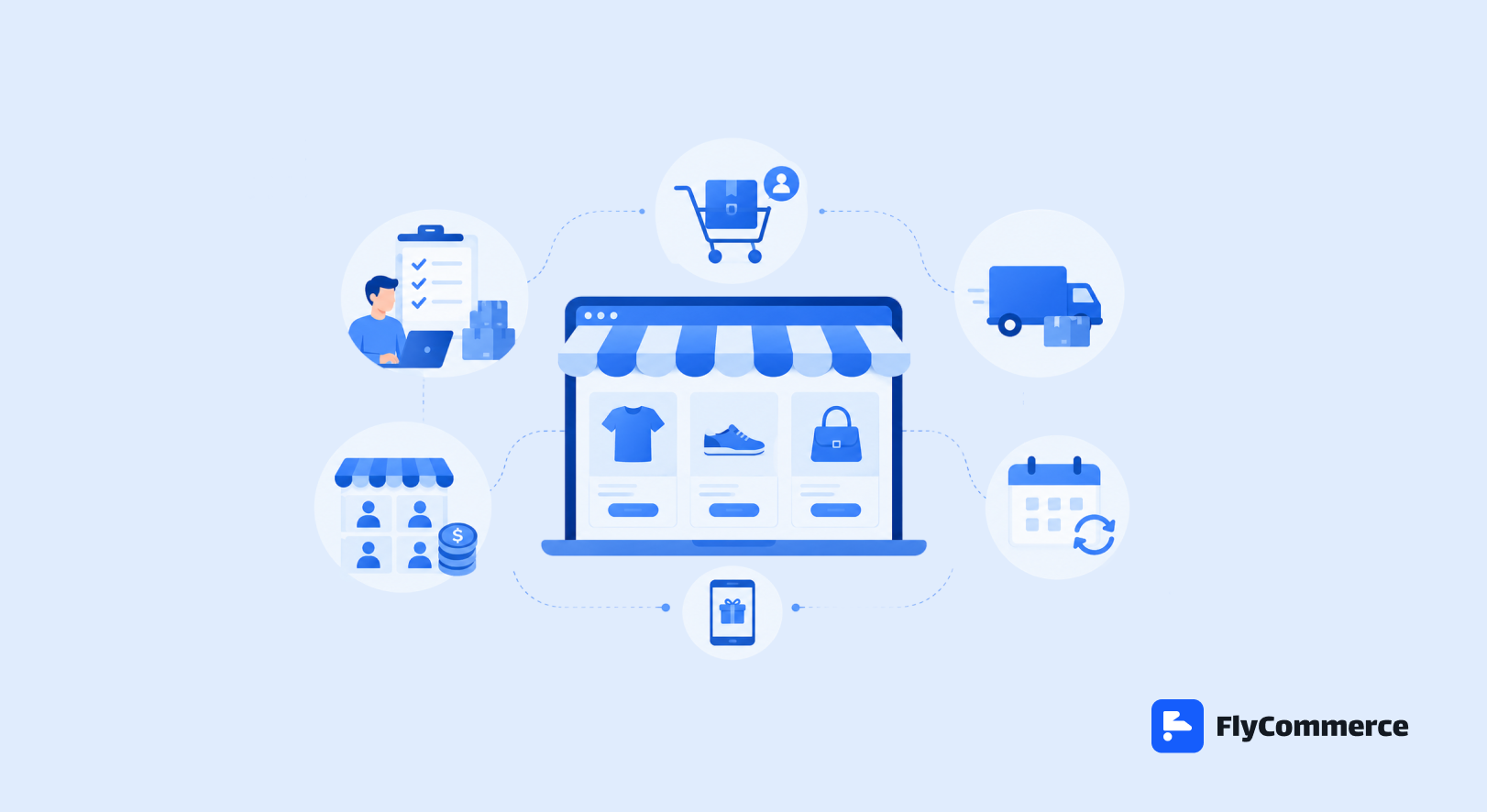
Ecommerce is not one business model. It is a channel that different types of businesses use in different ways. The right model depends on who you are selling to and what you are selling.
B2C (Business to Consumer)
A business sells products or services directly to individual consumers. This is what most people picture when they hear ecommerce: a brand with an online store, selling to people who shop for personal use. B2C is the largest category by transaction volume. Fashion, electronics, beauty, food, and home goods are the dominant verticals.
B2B (Business to Business)
A business sells to other businesses. Orders are typically larger, sales cycles are longer, and pricing is often negotiated rather than listed. B2B ecommerce is growing faster than B2C in most developed markets, because corporate buyers now expect the same digital experience they have as consumers — searchable catalogs, transparent pricing, and easy reordering.
C2C (Consumer to Consumer)
Individuals sell directly to other individuals through a platform that facilitates the transaction. The platform handles payments, trust signals, and dispute resolution. The sellers are not businesses. This model powers second-hand fashion, collectibles, handmade goods, and local selling.
D2C (Direct to Consumer)
A manufacturer or brand sells directly to the end customer, cutting out distributors and retailers. D2C gives the brand full control over pricing, customer data, and the buying experience. Higher margins and direct customer relationships are the main advantages. Building traffic from scratch is the main challenge.
Ecommerce Revenue Models
How an ecommerce business earns money depends on its model. A B2C store earns product margin. A marketplace earns commission on other sellers’ transactions. A SaaS tool earns subscription fees. A digital product seller earns on each download. Many ecommerce businesses combine revenue models as they scale.
| → Want the full breakdown? Read Types of Ecommerce Business Models Explained for a complete guide to every model, with examples and revenue mechanics. |
|---|
The Benefits of Ecommerce
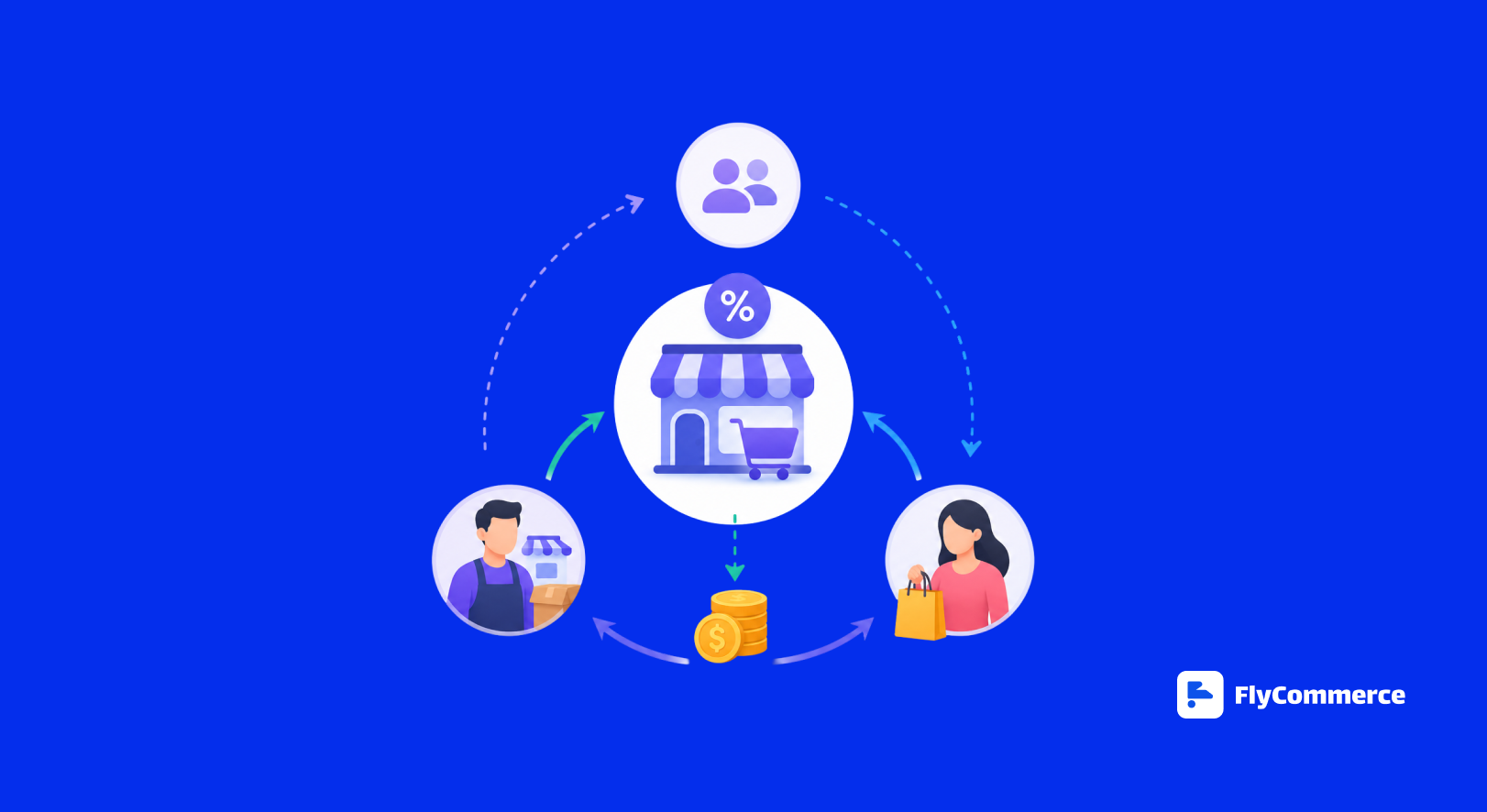
Ecommerce gives businesses several advantages over traditional offline selling.
You can sell beyond your local area
A physical store is limited by location.
An ecommerce store can reach customers in different cities, regions, or countries depending on shipping, payment, and tax setup.
This gives businesses more room to grow beyond local foot traffic.
You can sell 24/7
An ecommerce store can accept orders at any time.
Customers do not need to wait for store hours. They can browse, compare, and buy whenever they are ready.
Startup costs can be lower than physical retail
A physical store may require rent, decoration, staff, utilities, and local permits before the first sale.
An ecommerce store still has costs, but the starting cost can be much lower, especially when using a hosted platform instead of building everything from scratch.
You can track customer behavior
Ecommerce gives businesses data.
You can see which products people view, where traffic comes from, where customers drop off, which campaigns drive sales, and which products generate repeat purchases.
This helps businesses improve based on data instead of guessing.
You can scale faster
A physical store needs more space, staff, and locations to serve more customers.
An ecommerce business can often scale faster because the same digital storefront can serve more visitors, more orders, and more campaigns with the right systems in place.
The Challenges of Selling Online
Ecommerce also has real challenges.
A serious ecommerce business needs more than a good-looking website.
Standing out in a crowded market
Ecommerce has low barriers to entry, which means every viable product category has competition. A store selling handmade candles competes with thousands of other candle stores, plus the major retailers who stock candles as a category. Getting found — through SEO, paid ads, or social — is a real and ongoing cost of operating an ecommerce business.
Building trust without a physical presence
A buyer cannot touch the product, speak to a sales associate, or walk out with the item in hand. Trust is built through product photography, detailed descriptions, customer reviews, clear return policies, and secure checkout signals. Every one of these requires deliberate effort. A store that neglects them loses sales to a store that doesn’t.
Managing shipping, returns, and logistics
Shipping costs, delivery times, carrier reliability, packaging quality, and the returns process all affect customer satisfaction. A buyer who receives a damaged product and cannot return it easily will not return. Building a logistics process that works before you have significant order volume is harder than it sounds, and more important than most new sellers expect.
Customer service at scale
Questions about orders, shipping delays, product issues, and refund requests arrive regardless of whether you have a customer service team. At low volume, a founder handles this personally. At higher volume, the process needs to be systematized. Customers who receive slow or unhelpful responses leave negative reviews. Those reviews affect future sales.
Website performance and technical reliability
A page that takes four seconds to load loses 25% of visitors before it finishes loading. A checkout that errors on mobile loses the sale. A site that goes down during a peak period loses revenue and damages trust. Technical reliability is infrastructure, not decoration. It requires active attention, not a one-time setup.
Legal and Compliance Considerations for Ecommerce Sellers
Most ecommerce guides skip this section. That is the wrong call. Getting the legal foundations wrong creates problems that are expensive to fix later.
Sales Tax and VAT
In the US, ecommerce sellers are required to collect and remit sales tax in states where they have economic nexus – typically triggered when a seller reaches $100,000 in sales or 200 transactions in a state within a calendar year. The rules vary by state, by product category, and by customer type (B2C vs B2B exempt buyers).
VAT applies similarly in the UK and EU, with thresholds and rates that vary by country.
Manual tax calculation is not a realistic approach at any significant order volume. The right solution is certified tax automation. FlyCommerce holds dual Avalara AvaTax certification: the Sales Tax Badge for real-time US sales tax calculation across the full transaction lifecycle, and the Document Management (ECM) Badge for automated B2B exemption certificate handling. This covers US sales tax calculation and reporting only. Tax filing and remittance requires Avalara Managed Returns, which is a separate Avalara product.
For the complete guide to ecommerce sales tax – how nexus works, what triggers a filing obligation, and how automation removes the manual liability, read: Ecommerce Sales Tax: What Online Sellers Need to Know.
Data Privacy and GDPR
Any ecommerce store that collects personal data — which is every ecommerce store — is subject to data privacy regulations. In the EU and UK, GDPR applies. In the US, state-level laws (CCPA in California, for example) create similar obligations. The practical requirements include a privacy policy, cookie consent, data storage limits, and the ability to delete a customer’s data on request.
Operating an ecommerce store without addressing data privacy is not just a legal risk. It is a trust risk with increasingly informed buyers who read privacy policies before purchasing.
Business Registration and Terms of Service
Operating an ecommerce business typically requires registering a legal entity, opening a business bank account, and displaying terms of service, a returns policy, and contact information. What is required varies by country and business structure. Getting legal advice specific to your jurisdiction before launch is worth the cost of the consultation.
Ecommerce Trends to Watch in 2026
Ecommerce keeps changing as buyer behavior, technology, and platforms evolve. Here are the major trends to watch.
Mobile Commerce Now Accounts for More Than Half of All Transactions
More than 70% of ecommerce traffic comes from mobile devices. More than half of all transactions complete on a phone. A store that is not mobile-optimized is not losing some customers — it is losing the majority of them. Page speed, tap targets, simplified checkout, and mobile payment options (Apple Pay, Google Pay) are not optional features. They are baseline requirements.
AI Is Changing How Stores Operate and How Buyers Discover Products
AI tools now write product descriptions, generate images, power search and recommendation engines, handle customer service queries, and run dynamic pricing. On the buyer side, AI-powered search is changing how people discover products — typed queries are giving way to conversational searches and visual discovery. Stores that adapt to this shift get found. Stores that do not become harder to discover.
Social Commerce Is Closing the Gap Between Discovery and Purchase
The distance between seeing a product and buying it is collapsing. TikTok Shop, Instagram Shopping, and YouTube Shopping let buyers complete a purchase inside the social feed without visiting an external store. Social commerce sales in the US are on track to exceed $100 billion in 2026. For product categories where visual appeal drives purchase decisions, social is now the primary acquisition channel.
How to Start an Ecommerce Business
Starting an ecommerce business comes down to four decisions. Each one has a dedicated guide in this cluster for the full walkthrough.
Decision 1: What to sell The product determines the market, the margin, the fulfillment model, and the competition you face. Physical products, digital products, services, and subscriptions each carry different operational requirements and profit structures. Read: Profitable Ecommerce Business Ideas to Start in 2026
Decision 2: What type of platform Hosted SaaS platforms handle the infrastructure for you — no server, no plugins, no maintenance. Self-hosted platforms give you more code-level control at the cost of managing your own infrastructure. The right choice depends on your technical resources and how much of your time you want spent on platform maintenance vs growing the business. Read: Hosted vs Self-Hosted Ecommerce: Which Is Right for You?
Decision 3: What it will cost Platform fees, payment processing fees, domain registration, email marketing, and any design or development work all factor into the real cost of starting an ecommerce store. The range is wide — from a few hundred dollars per year for a basic SaaS store to tens of thousands for a custom build. Read: How Much Does an Ecommerce Website Cost?
Decision 4: Which platform The platform you choose determines your feature set, your technical ceiling, and what you can build as the business grows. Read: Best Ecommerce Platforms for Small Business in 2026 and How to Choose the Right Ecommerce Platform
One honest note: ecommerce is not the right model for every business. If you sell highly perishable goods that require same-day local delivery, operate in a regulated service category that requires in-person consultation, or need to assess a product physically before transacting, a digital-first model may not serve your customers as well as a physical one.
For founders who are ready to start, FlyCommerce is a no-code, cloud-hosted SaaS ecommerce platform that removes the technical setup entirely. No server, no hosting bill, no developer required. Payments, shipping, tax compliance, SEO, and analytics are already built in. Launch, sell, and grow from one place. Shop plans start at $20/month plus a 1% revenue share on yearly billing. 14-day free trial, no credit card required.
Start building your online store on FlyCommerce
For the complete step-by-step guide to going from zero to a live store, read: How to Start an Online Store from Scratch
What Every Successful Ecommerce Store Needs
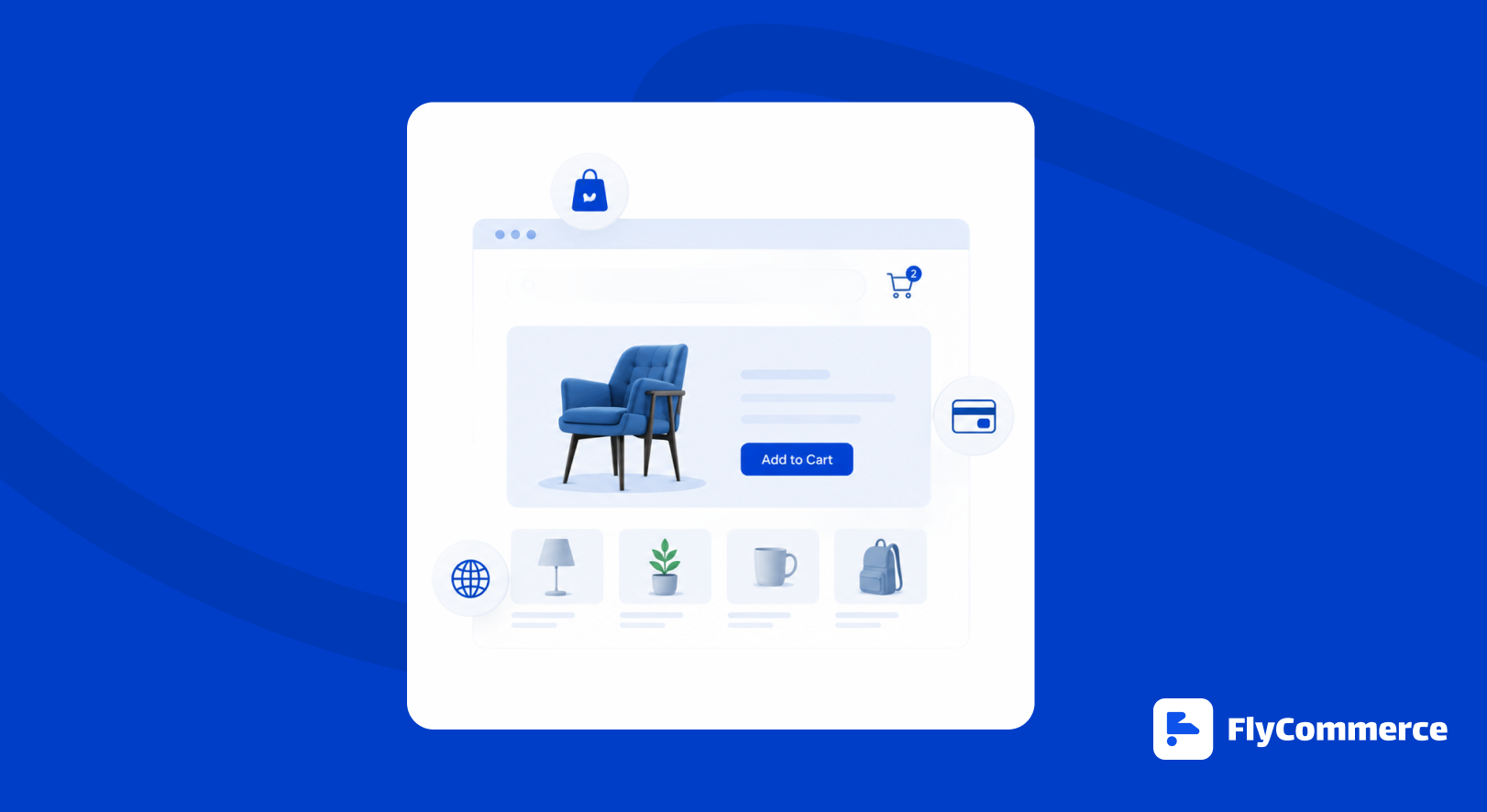
Knowing what to build and knowing what you need to run it are two different things. Here is what every operational ecommerce store requires.
A Professional Storefront With Your Own Domain
Your storefront is how buyers form their first impression. A custom domain, a clean design, mobile responsiveness, and fast page loading are not differentiators — they are baseline expectations. A buyer who lands on a slow, generic-looking store leaves before engaging with a single product.
Secure Payment Processing
Buyers need to trust that their card details are safe. PCI DSS-compliant payment processing, SSL encryption, and recognizable payment options (Stripe, PayPal, Apple Pay) are the visible trust signals that keep buyers at checkout instead of abandoning it.
Shipping and Fulfillment Setup
Shipping costs, delivery time estimates, carrier selection, packaging, and a returns process all need to be decided before the first order arrives. The buyers who receive a clear delivery estimate and a simple return process come back. The buyers who don’t, don’t.
Tax Compliance Built In
Collecting the wrong tax rate, missing an exemption, or failing to collect tax where you have nexus creates liability. Tax automation that calculates the correct amount at checkout — by location, by product type, and by customer type – removes the manual work and the risk.
SEO and Product Discoverability
Buyers who cannot find your store cannot buy from it. Product-level SEO (optimized titles, descriptions, metadata), site-level SEO (structure, speed, sitemaps), and channel SEO (social discoverability, marketplace listings) all contribute to being found. Stores that treat SEO as an afterthought spend significantly more on paid traffic than stores that build it in from day one.
Analytics and Reporting
Without data, the only way to improve a store is to guess. Analytics tell you which products are selling, where buyers are coming from, where they are dropping off, and what is driving repeat purchases. The first version of a store is an experiment. Analytics are how you learn what the experiment is telling you.
A Clear Returns and Customer Support Process
Returns happen. Questions happen. How a store handles both determines whether the buyer comes back. A clear returns policy, a responsive support channel, and a fast resolution process build the trust that advertising cannot buy. The stores with the highest repeat purchase rates are not the ones with the lowest return rates — they are the ones that handle returns and support better than anyone else.
Ecommerce Terms You Should Know
This glossary covers the terms that appear most frequently in ecommerce platforms, analytics tools, and seller guides. Each definition is written to be used, not just understood.
| Term | What it means |
|---|---|
| SKU | Stock Keeping Unit. A unique code assigned to each product variant in your catalog. A t-shirt in size M and size L are different SKUs even if they are the same product. |
| Shopping cart | The digital container where buyers collect products before checkout. Cart abandonment — when a buyer adds to cart but does not complete the purchase — averages 70% across ecommerce. |
| Payment gateway | The technology that processes, authorizes, and settles online payments. Stripe, PayPal, and Razorpay are examples. The gateway connects the buyer’s bank to the seller’s bank. |
| Checkout abandonment | When a buyer begins the checkout process — entering their address or payment details — but leaves before completing the purchase. Distinct from cart abandonment, which happens before checkout begins. |
| Conversion rate | The percentage of store visitors who complete a purchase. A conversion rate of 2% means 2 out of every 100 visitors buy something. Industry average for ecommerce is 1% to 4%. |
| GMV | Gross Merchandise Value. The total value of goods sold through a platform in a given period, before any fees, returns, or deductions. Used to measure marketplace and platform scale. |
| Fulfillment | The process of receiving an order, picking and packing the product, and shipping it to the buyer. Third-party fulfillment services handle this on behalf of the seller. |
| Dropshipping | A fulfillment model where the seller does not hold inventory. When a buyer orders, the seller purchases the product from a supplier who ships it directly to the buyer. The seller never touches the product. |
| Revenue share | A percentage of sales revenue paid to the platform or marketplace operator on each transaction. FlyCommerce uses a subscription plus revenue share model — for example, $20/month plus a 1% revenue share on the Shop Launch plan. |
| Multi-vendor marketplace | An ecommerce platform where multiple independent sellers list and sell their products under one storefront. The platform owner earns commission on each sale. FlyCommerce Marketplace plans support this model from $48/month plus a 1% revenue share. |
| Sales tax / VAT | Government-mandated tax collected on sales transactions. In the US, sales tax rates and rules vary by state. In the EU and UK, VAT applies. Ecommerce sellers are responsible for collecting and remitting tax where they have nexus or meet VAT registration thresholds. |
| AOV | Average Order Value. The average amount spent per transaction in a store. Calculated by dividing total revenue by number of orders. Increasing AOV through bundling, upsells, or free shipping thresholds is one of the most efficient ways to grow revenue without increasing traffic. |
| Ecommerce platform | The software that powers an online store. It manages the storefront, product catalog, checkout, payments, orders, and analytics. Platforms range from hosted SaaS (FlyCommerce, Shopify) to self-hosted open-source (WooCommerce, Magento). |
| Hosted SaaS | Software as a Service — a platform where the provider manages the server, hosting, security, and updates. The seller pays a subscription fee and gets a fully managed store without managing any infrastructure. FlyCommerce is a hosted SaaS platform. |
| Nexus | A legal term for sufficient connection to a state or jurisdiction that creates a sales tax collection obligation. Economic nexus is typically triggered by reaching $100,000 in sales or 200 transactions in a state within a calendar year. |
Frequently Asked Questions About Ecommerce
What is ecommerce?
Ecommerce is the buying and selling of products or services over the internet. It includes online stores, marketplaces, digital products, subscriptions, services, and online payments.
How does ecommerce work?
Ecommerce works by connecting a customer, an online storefront, a product catalog, checkout, payment processing, order management, and fulfillment. A customer finds a product, places an order, pays online, and receives the product or service.
What are the main types of ecommerce?
The main types of ecommerce are B2C, B2B, C2C, and D2C. B2C sells to consumers, B2B sells to businesses, C2C connects consumers with other consumers, and D2C lets brands sell directly to customers.
What is the difference between ecommerce and an online store?
An online store usually has one seller. A marketplace has multiple sellers under one platform. Marketplaces need vendor onboarding, seller management, commissions, payouts, and marketplace rules.
Do I need technical skills to start ecommerce?
No, not always. A no-code, hosted ecommerce platform can help you build and manage a store without coding, server setup, or plugin maintenance. Technical skills are more important if you build a custom or self-hosted ecommerce system.
Do I need technical skills to start ecommerce?
No, not always. A no-code, hosted ecommerce platform can help you build and manage a store without coding, server setup, or plugin maintenance. Technical skills are more important if you build a custom or self-hosted ecommerce system.
How much does it cost to start an ecommerce business?
The cost depends on your platform, domain, payment processing, design, products, marketing, and fulfillment. A hosted SaaS platform can reduce upfront technical costs, while a custom ecommerce website usually costs more.
Can a small business use ecommerce?
Yes. Small businesses can use ecommerce to sell beyond their local area, accept online payments, manage orders, promote products, and build repeat customers.
Is ecommerce still worth starting in 2026?
Yes, but success depends on product selection, positioning, customer trust, traffic, fulfillment, pricing, and platform choice. Ecommerce is not only about launching a website. It is about building a complete selling system.